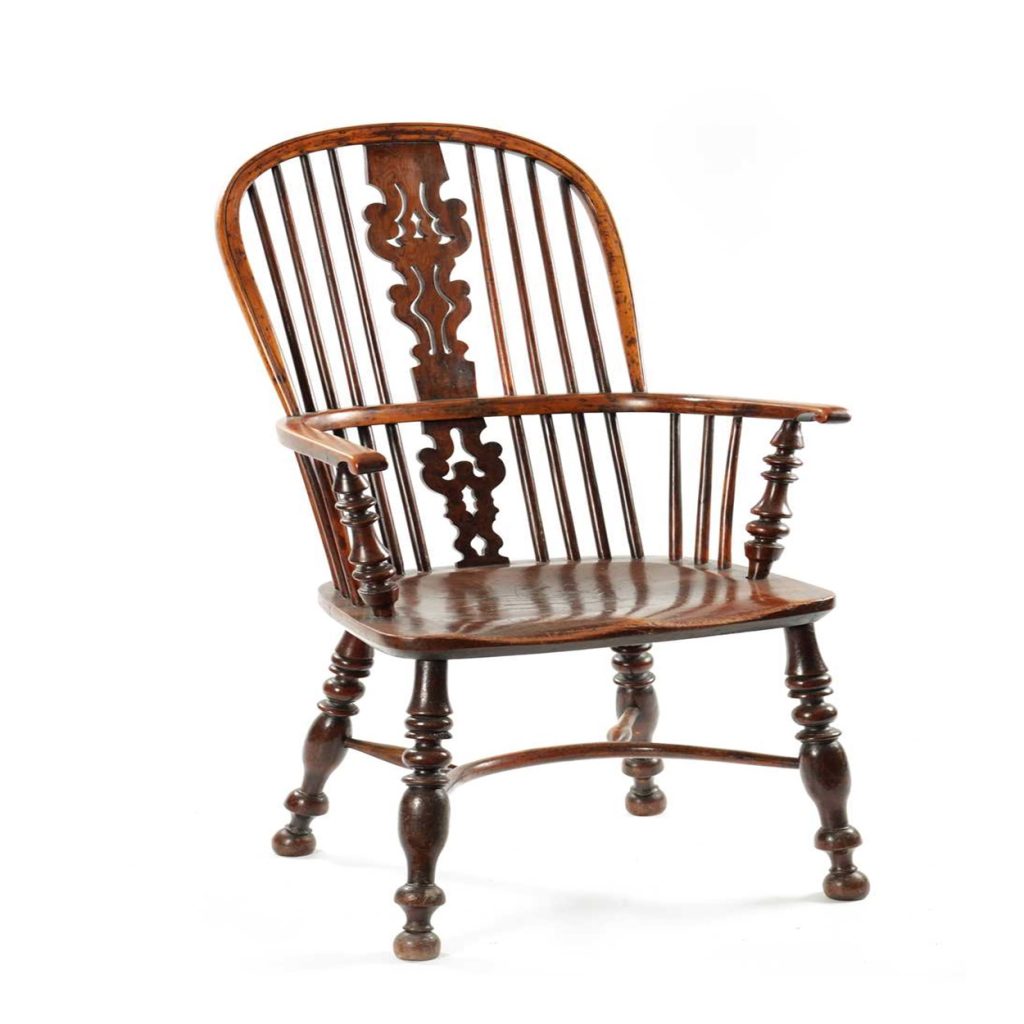
The Windsor chair is a classic and enduring piece of furniture with a rich history that dates back to the early 18th century in England. The exact origin of the Windsor chair is not definitively known, but it is widely believed to have emerged in the Thames Valley region. These chairs gained popularity in the 18th century and quickly spread to other parts of England and eventually to America.
Here is a brief history of the antique Windsor chairs:
18th Century Origins:
The Windsor chair is characterized by its distinctive design, featuring a solid wooden seat and a backrest made up of multiple spindles attached to a solid wooden base.
The design allowed for a lighter and more portable chair compared to the heavy, upholstered furniture of the time.
The earliest Windsor chairs were likely made in the early 18th century, and they were initially named after the English town of Windsor, where they gained popularity.
Evolution and Regional Variations:
Windsor chairs evolved over time, and various regional styles emerged, each with its unique characteristics.
Different regions in England and later in America developed their own variations, such as the Thames Valley, the West Country, and the Midlands styles.
American Influence:
The Windsor chair design made its way to the American colonies in the early 18th century.
American craftsmen embraced the form and adapted it to suit their tastes and needs.
Windsor chairs became a staple in American homes, particularly during the Colonial and Federal periods.
Production Methods:
Windsor chairs were typically made using a combination of turned and shaved wooden components.
The use of various types of wood, such as oak, ash, maple, and hickory, contributed to the durability and aesthetic appeal of the chairs.
19th Century and Later:
The popularity of Windsor chairs continued into the 19th century, and the design underwent further modifications.
Factory production during the 19th century made Windsor chairs more accessible to a broader audience.
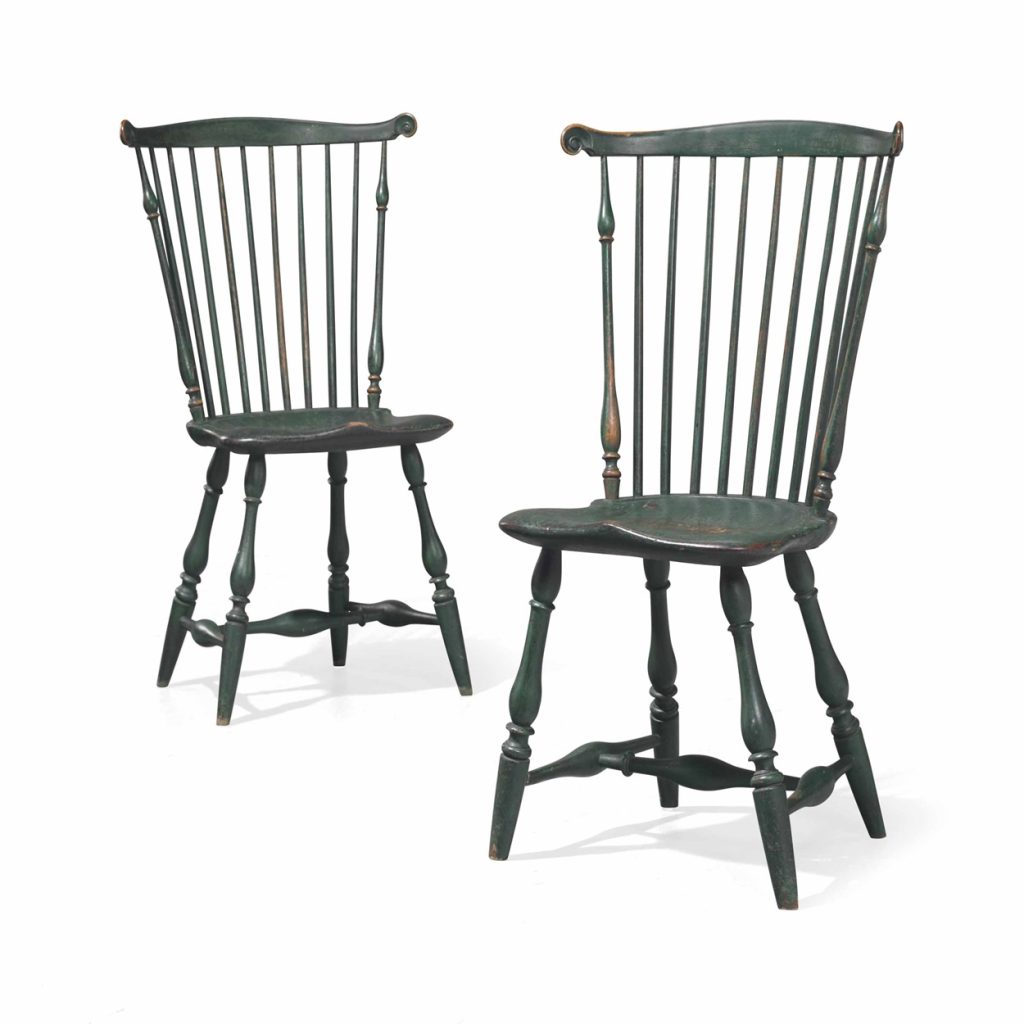
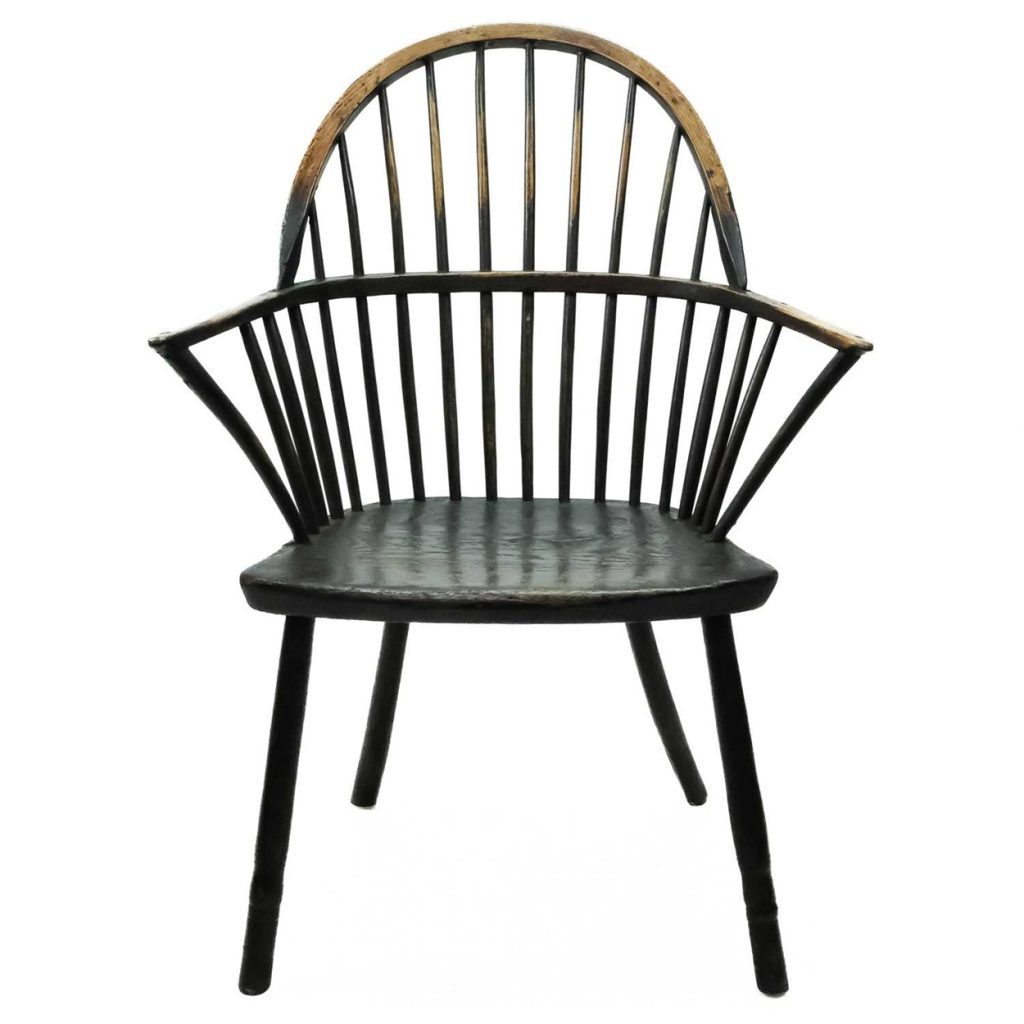
Different styles, including the fan-back, hoop-back, and comb-back, emerged during this period.
Enduring Legacy:
Windsor chairs have remained popular and enduring throughout the centuries due to their simple yet elegant design and comfort.
Today, antique Windsor chairs are highly sought after by collectors and enthusiasts, and craftsmen continue to produce variations of this classic design.
The Windsor chair’s timeless design and adaptability have contributed to its enduring appeal, making it a cherished piece of furniture with a significant place in both British and American design history
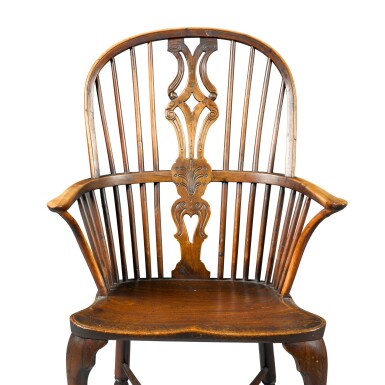
Georgian yew, ash and elm Windsor chairs, Thames Valley, first half 19th century ith carved back splat and mahogany saddle seat
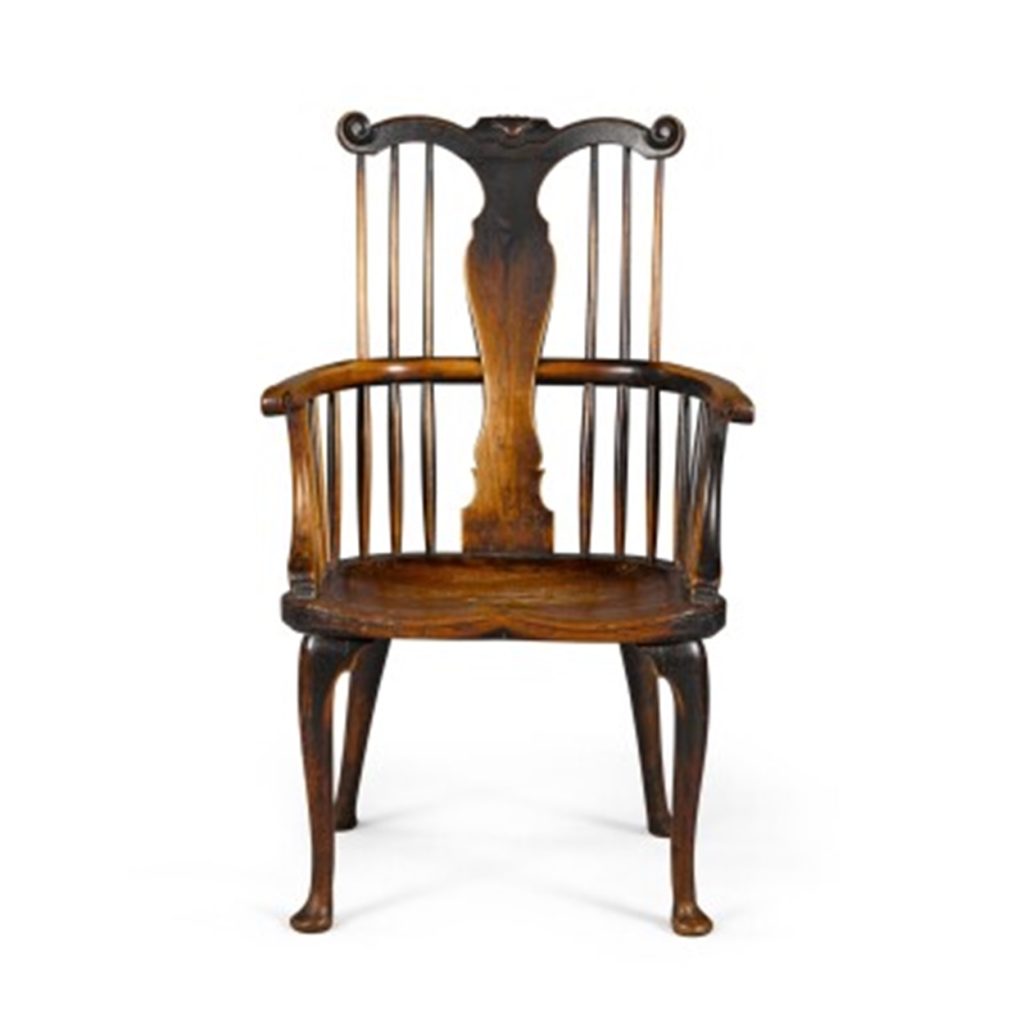
A late George III ash and elm Windsor chair, Thames Valley, early 19th century -the backrest with shaped toprail centred with carved shell above a shaped back splat with spindle supports and yoke armrest, the saddle seat with cabriole front legs on pad feet
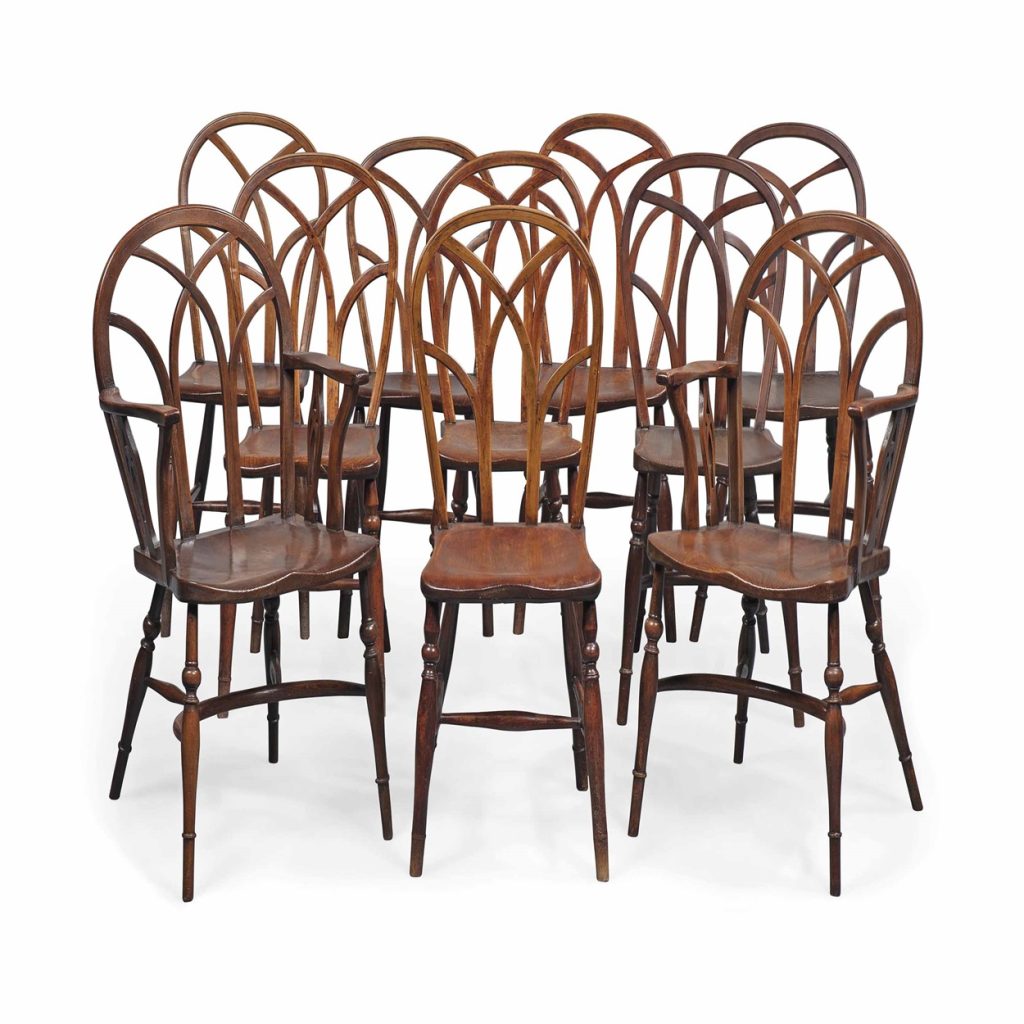
Gothic Windsor armchairs Early 19th century All with elm seats, two chairs in yew and with crinoline stretchers, the rest in ash, all with pierced backs, the armchairs with under-arm pierced splats
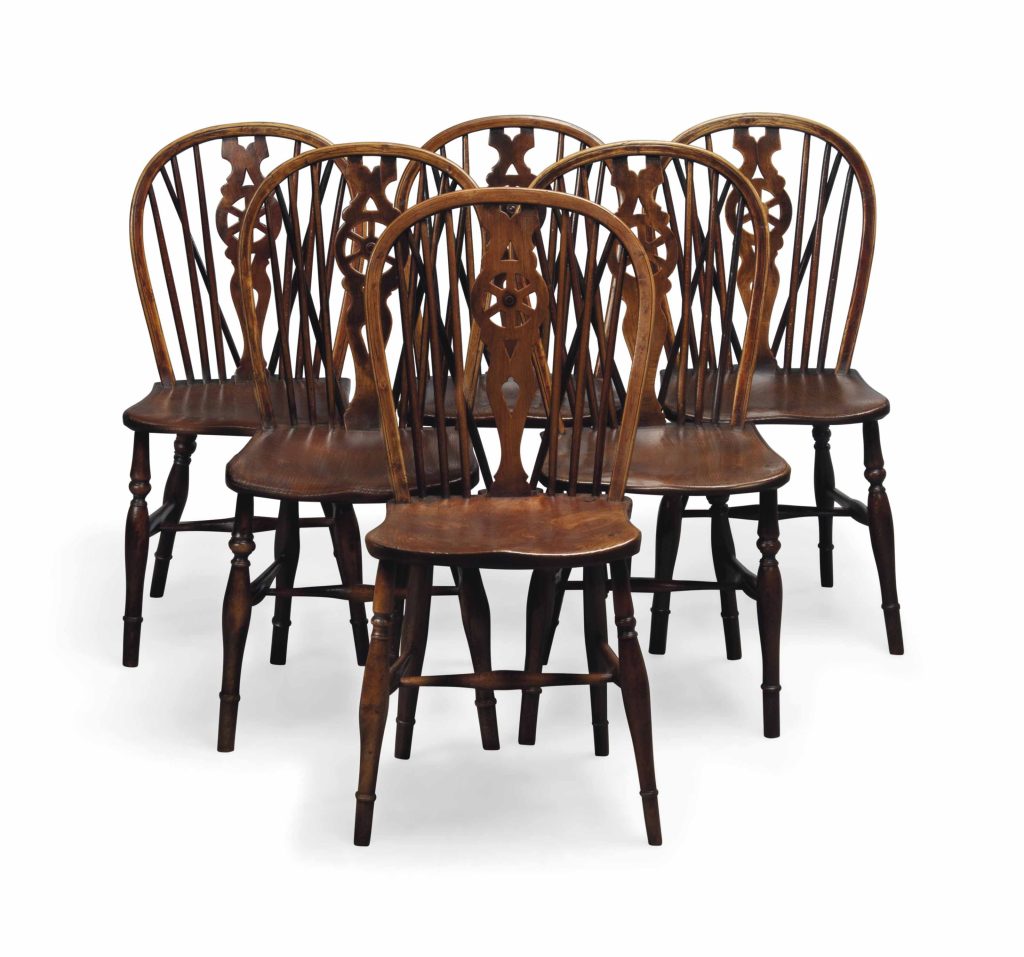
GEORGE IV WINDSOR CHAIRS Ash, elm beech and cherry, each with pierced splat and figured elm seat
GREEN-PAINTED FAN-BACK WINDSOR SIDE CHAIRS BRANDED BY JOSEPH HENZEY (1743EARLY 19TH CENTURY , three with ring-turned back legs-1796), PHILADELPHIA, LAST QUARTER 18TH CENTURY
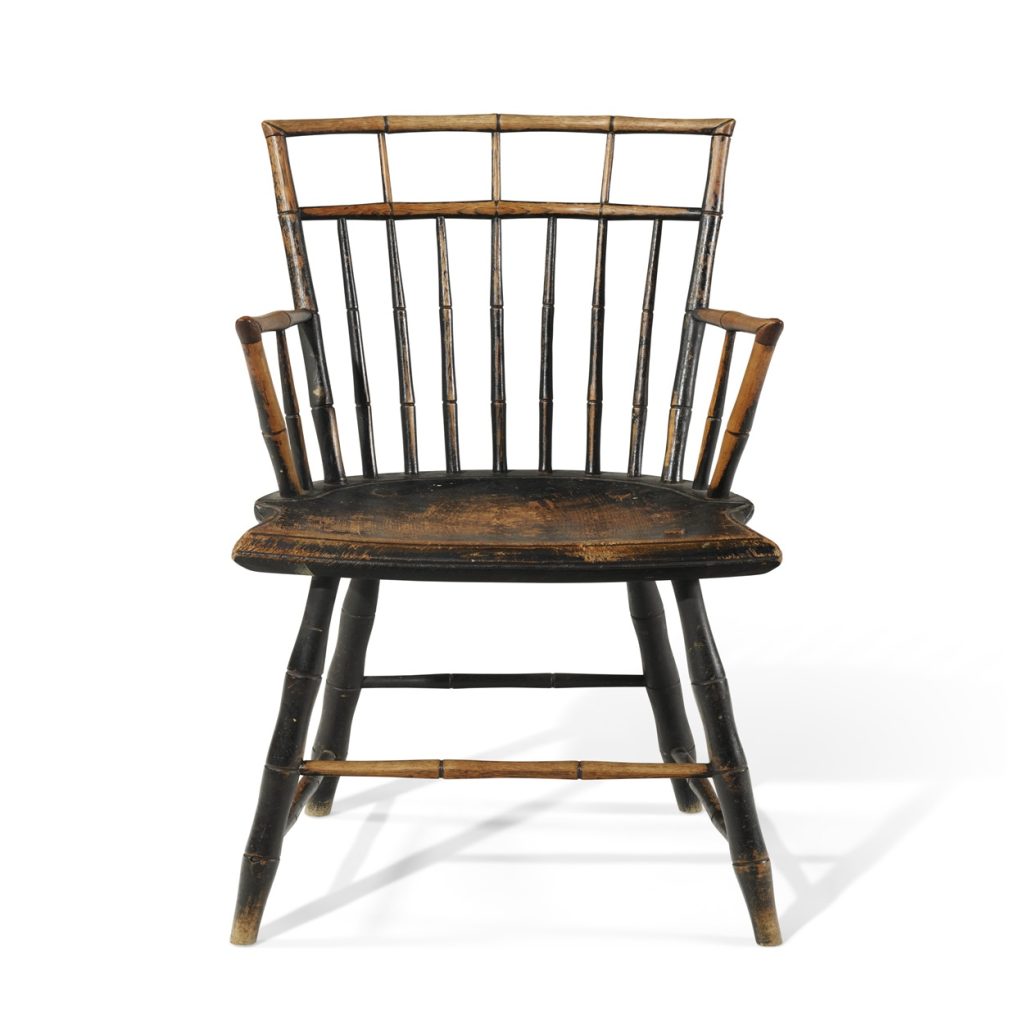
BAMBOO SIMULATED PAINT-DECORATED ASH AND PINE WINDSOR CHAIRS NEW ENGLAND, CIRCA 1815
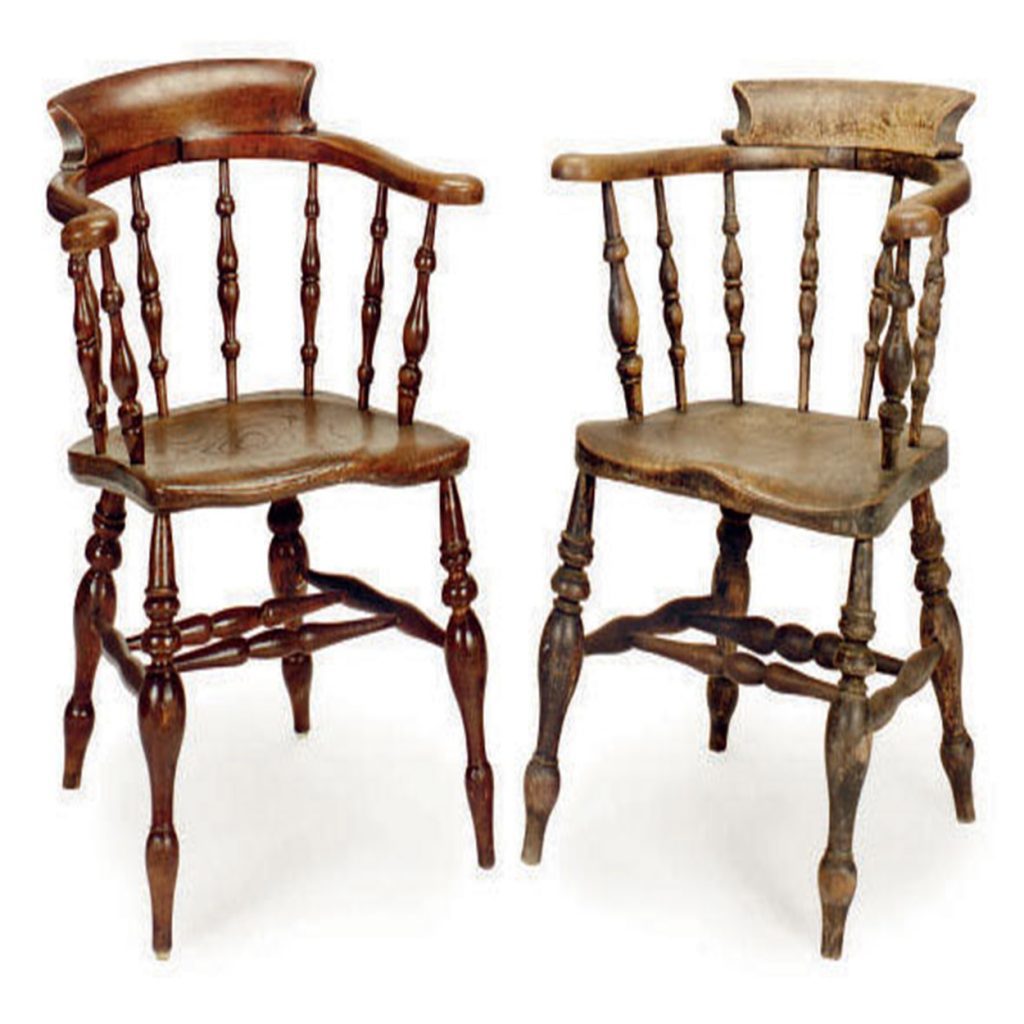
ELM WINDSOR CHAIRS, 20TH CENTUR
CORNISH ASH AND ELM WINDSOR ARMCHAIR Early 19th century, with spindle back and turned legs, with traces of original green paint
EARLY 19TH CENTURY NOTTINGHAMSHIRE YEW-WOOD HIGH BACK WINDSOR CHAIRwith hooped back and shaped pierced back splat above an elm saddle seat raised on ring-turned legs joined by a crinoline stretcher,