Thomas Sheraton (1751-1806) was a renowned English furniture designer, cabinetmaker, and author who played a significant role in shaping the neoclassical style during the late 18th century. His work, particularly his designs for furniture, became influential in both Britain and the United States. Sheraton’s furniture designs were characterized by simplicity, elegance, and a focus on clean lines.
The Sheraton style emerged during the late 18th century, around the same time as the Federal style in the United States. It was part of the larger Neoclassical movement that drew inspiration from classical Greek and Roman design elements. Sheraton’s designs were more restrained compared to the earlier, more ornate Georgian furniture, reflecting a shift towards a lighter and more refined aesthetic.
Here are some key features of Thomas Sheraton style chairs:
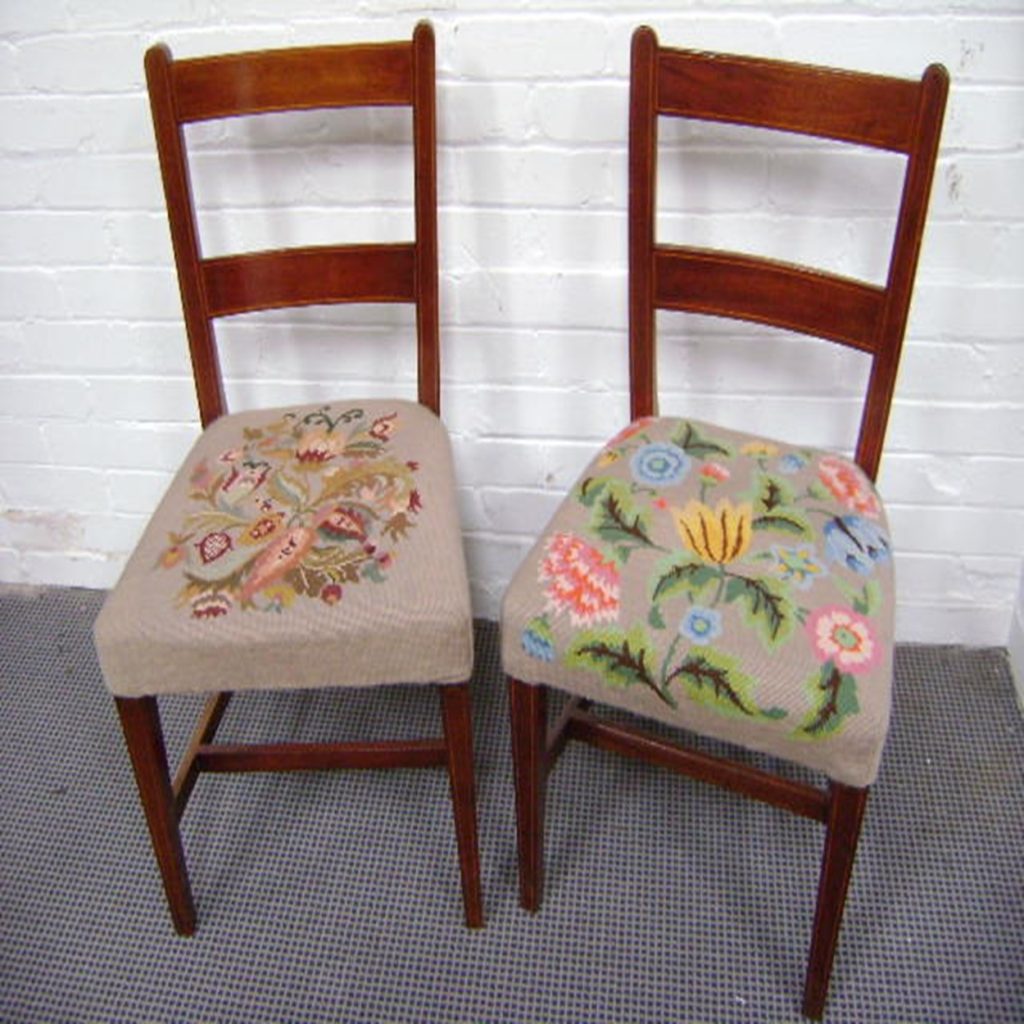
Straight Lines and Tapered Legs: Sheraton’s chairs typically featured straight lines and tapered legs, a departure from the cabriole legs popular in earlier styles. This gave the furniture a more streamlined and elegant appearance.
Classical Motifs: Inspired by ancient Greek and Roman design, Sheraton incorporated classical motifs such as urns, columns, and geometric shapes into his furniture. These elements added a sense of sophistication and timelessness to his designs.
Inlay and Veneer: Sheraton often used intricate inlay and veneer work to embellish his furniture. This technique involved applying thin layers of decorative wood onto the surface of the furniture, creating detailed patterns and designs.
Light and Portable: Sheraton’s designs were lighter and more portable compared to the heavier furniture of the preceding Georgian era. This shift reflected changing tastes and a desire for furniture that was both aesthetically pleasing and functional.
Upholstery: Chairs designed in the Sheraton style often featured upholstered seats and backs. The upholstery was typically in neutral colors and sometimes adorned with delicate patterns.
Thomas Sheraton’s influence extended beyond his lifetime, as his designs were published posthumously in “The Cabinet-Maker and Upholsterer’s Drawing Book” (1791-1802). This influential publication disseminated his designs to a wider audience, contributing to the popularity of the Sheraton style.
While Sheraton’s original pieces are highly sought after by collectors, the popularity of his designs endured through reproductions and adaptations, ensuring that the Sheraton style continued to influence furniture design for years to come.
19th century painted beech side chair. In the George III style after a design by Thomas Sheraton. with shield back with vase shaped splat on square tapered legs painted buff and decorated in colours the stuffed
George III Mahogany Hall chairs
with a moulded pelta-shaped back above a shaped solid seat on turned and reeded legs joined by X-stretchers. Circa 1790 after a design by Thomas Sheraton
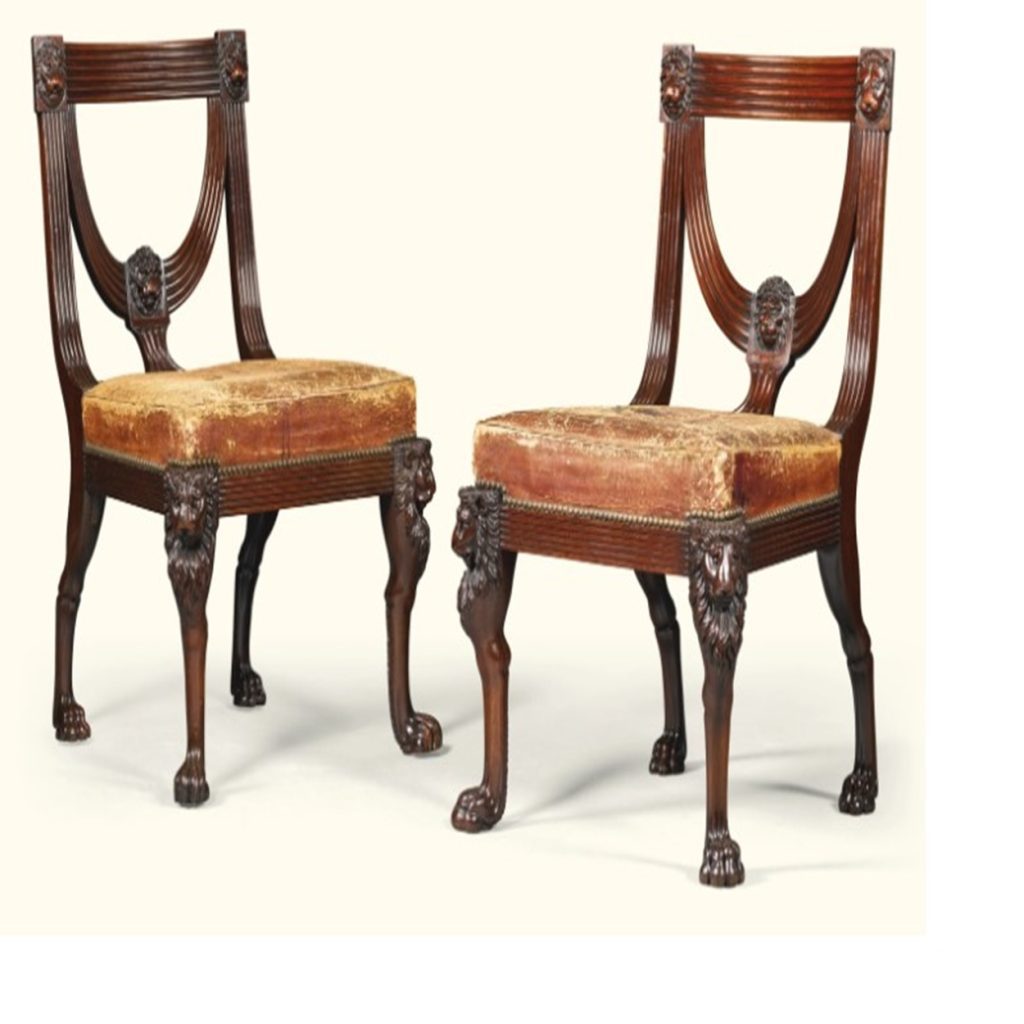
Circa 1810 fine Quality carved Mahogany side chair. with reeded frame and a curved tablet top-rail flanked by lion masks, above a pierced curved splat with lion-mask base on splayed-fluted support, the padded seat on reeded rails above front carved lion monopodiae legs on pa feet. After design by Thomas Sheraton
19th century Sheraton-style side chairs. With later white and gold paint
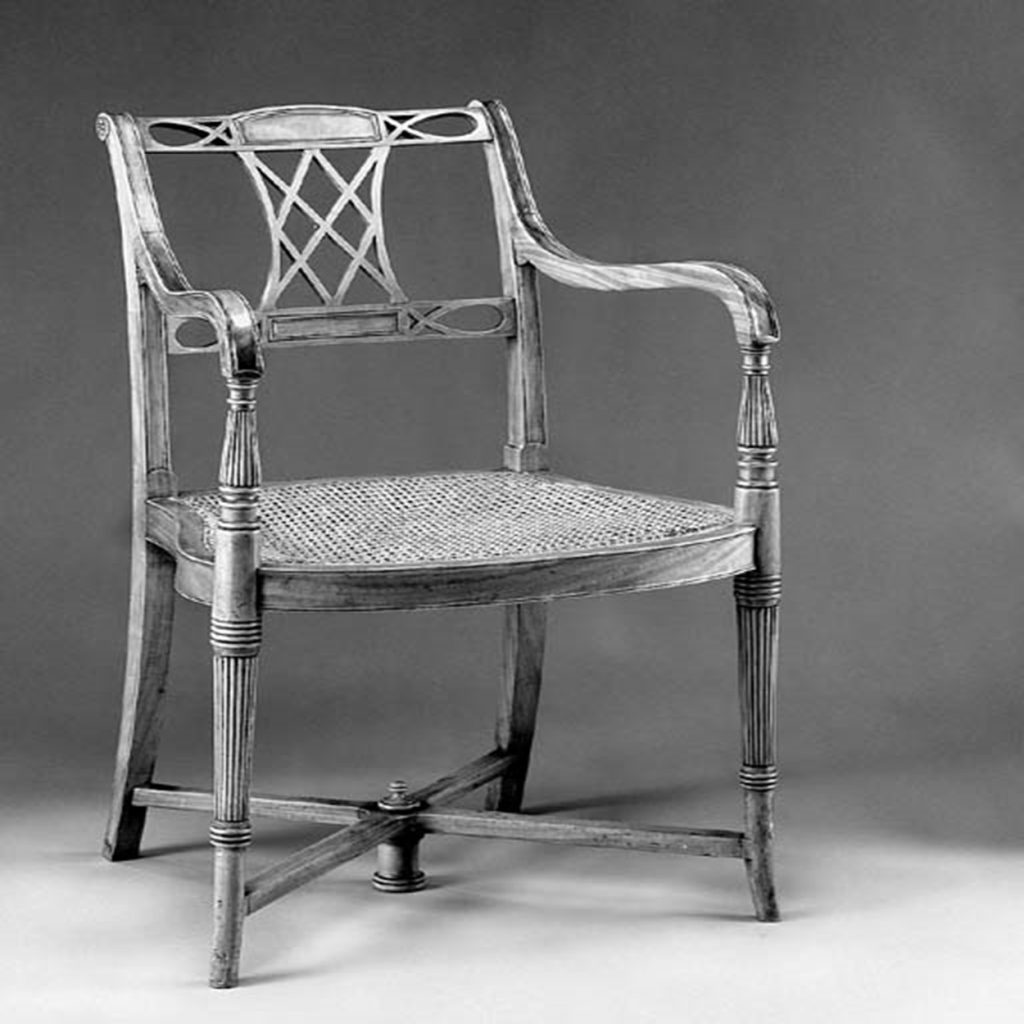
Satinwood in the Sheraton revival style by Waring & Gillows. lattice back with tapering fluted arm supports, a caned seat, with a cross-banded stretcher with deck securing drum at the centre.
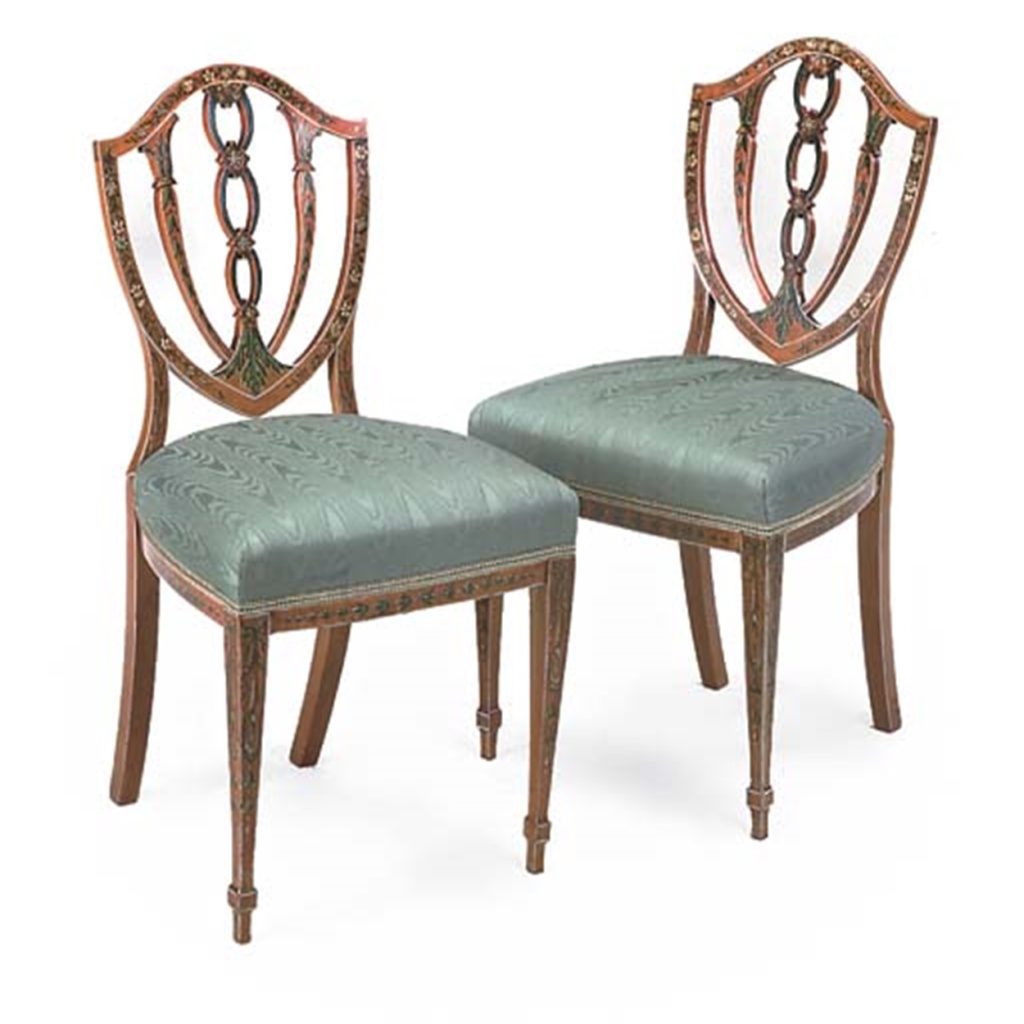
Early 20th century Satinwood Dining Chair each with a pierced shield-shaped back painted with flowers, on square tapering legs.
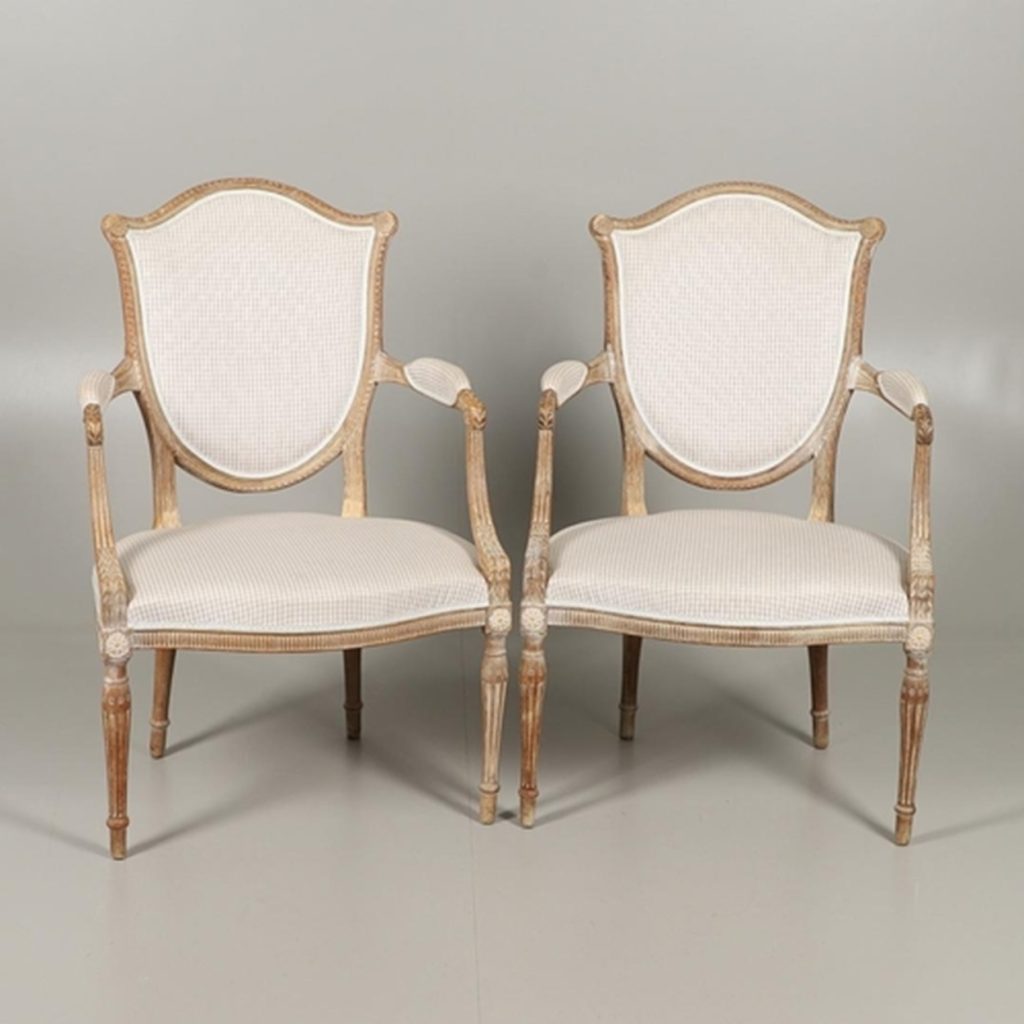
Sheraton Style Limewood Elbow chairs
The shield backs on scroll arms, serpentine seat and fluted legs.
Country style mahohany Sheraton style chairs.
American Sheraton ebonised and stencilled wood side chairs, by Lambert Hitchcock, circa 1820; each with fruit decorated backsplay.