The Hepplewhite style of furniture, including chairs, emerged during the late 18th century in England. Named after the renowned cabinetmaker George Hepplewhite, this design style is often associated with the Neoclassical period and is characterized by its graceful and delicate appearance. Hepplewhite was active during the last two decades of the 18th century, and his work became influential in shaping the furniture designs of the time.
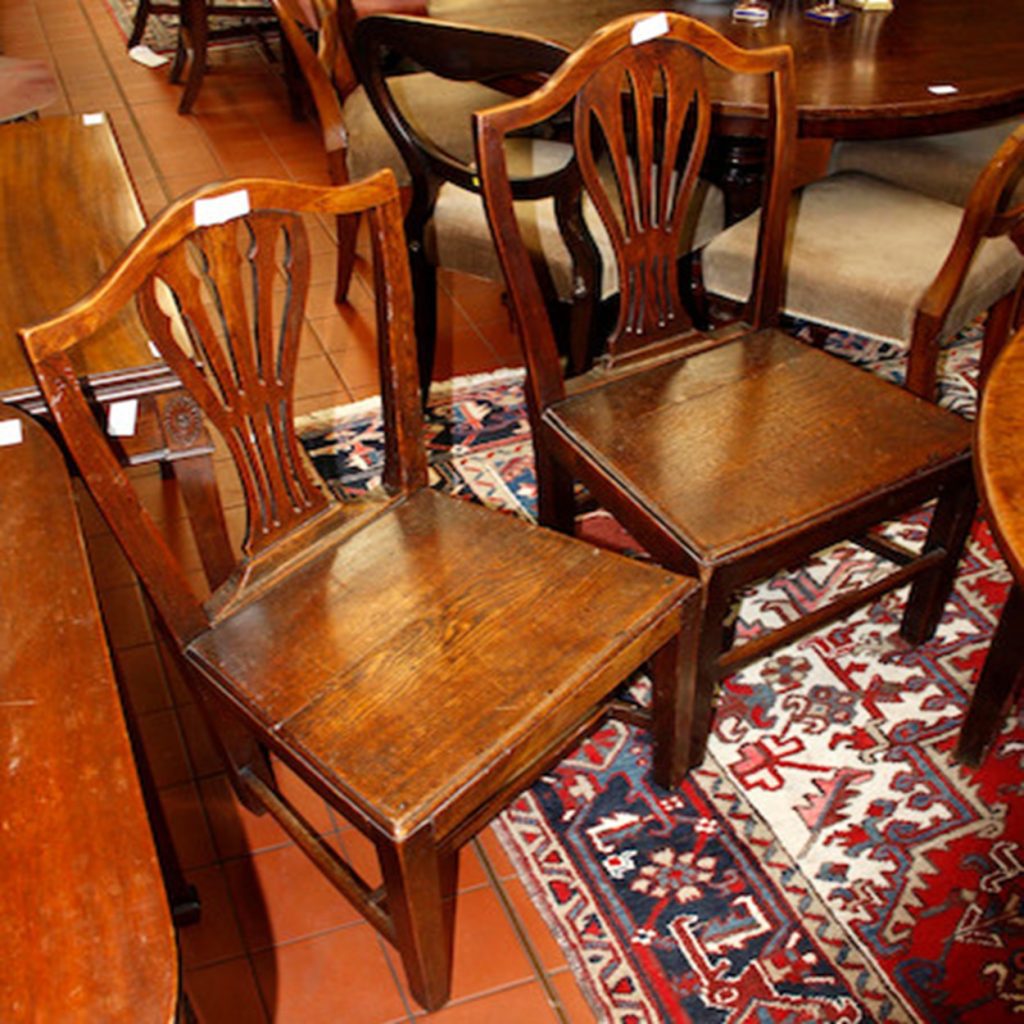
Straight Tapered Legs: Hepplewhite chairs typically have straight, tapered legs. The legs often terminate with spade feet, which add a touch of elegance to the overall design.
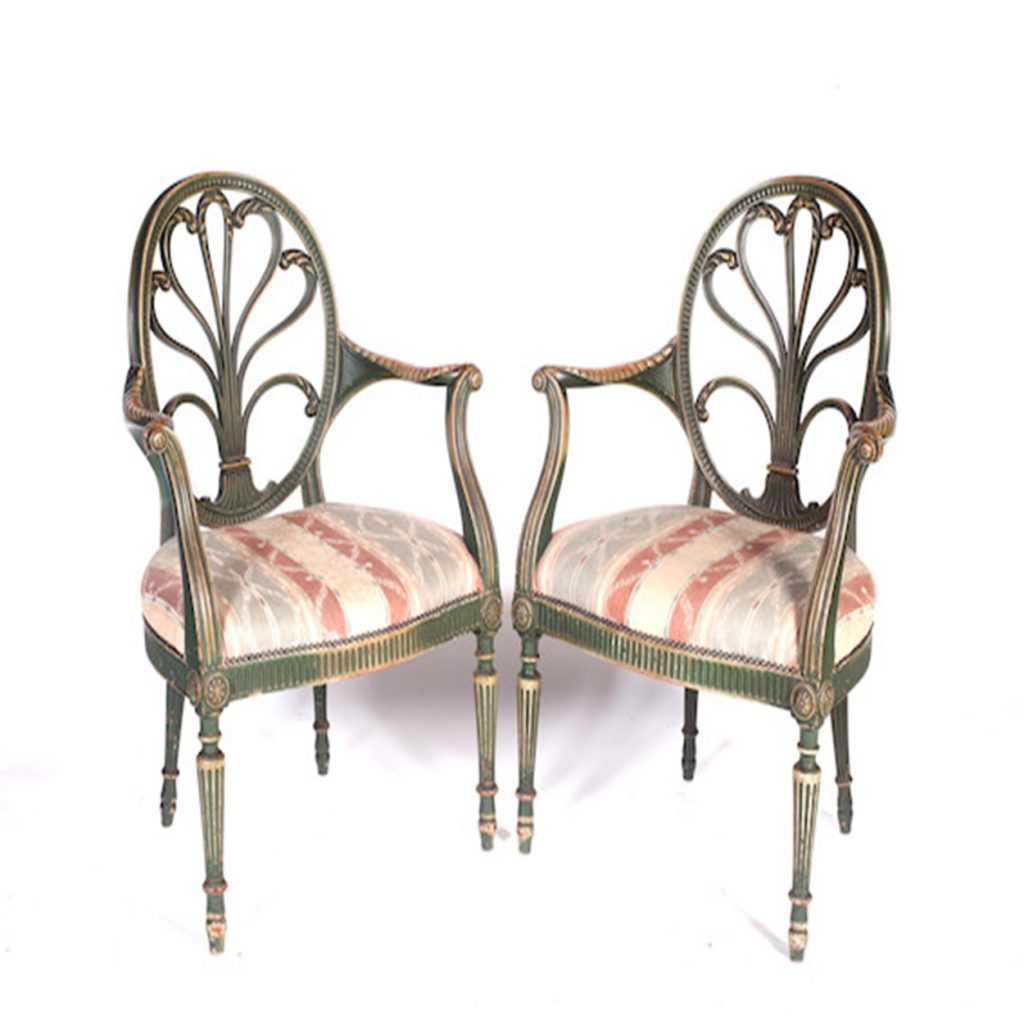
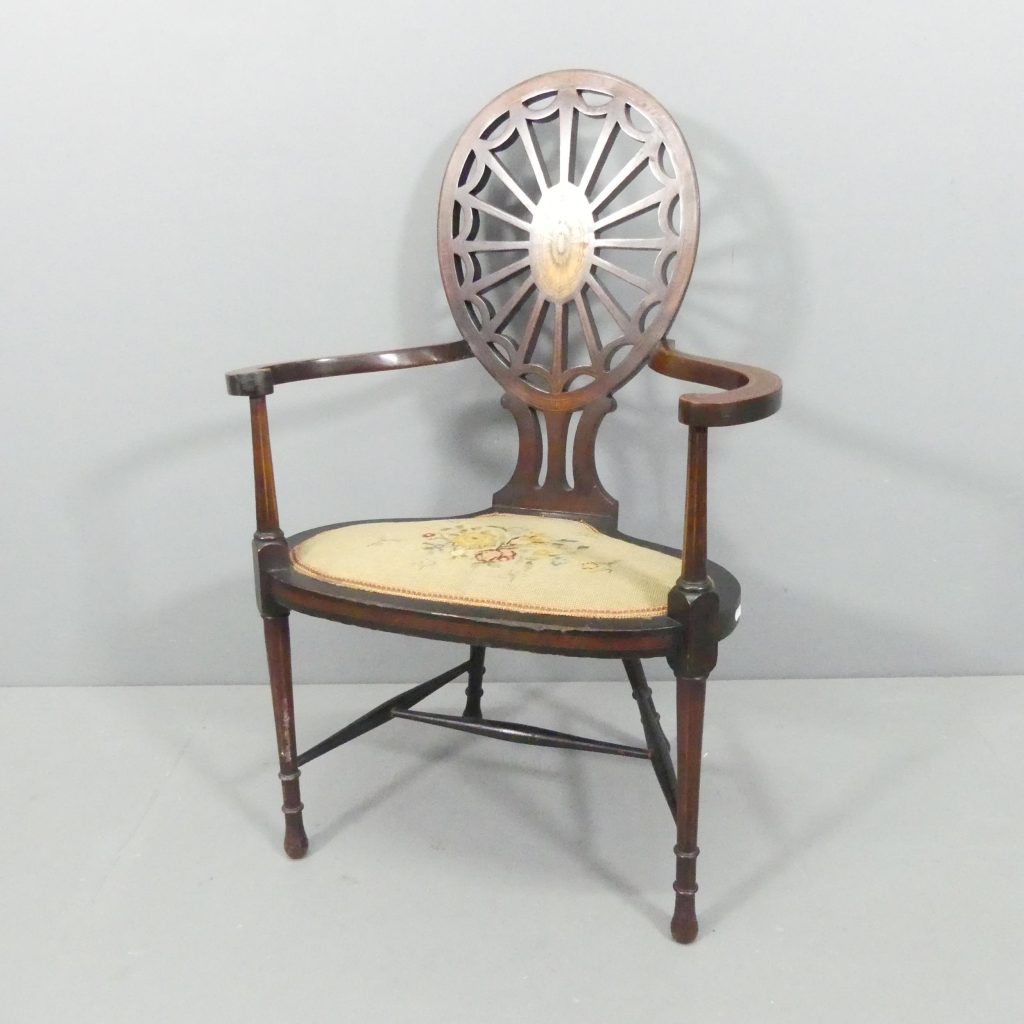
Shield-Back Design: One of the distinctive features of Hepplewhite chairs is the shield-shaped backrest. The backrests are often pierced with intricate designs, such as ovals, fans, or urns. These decorative elements contribute to the overall refinement of the furniture.
Serpentine Front Rail: Hepplewhite chairs often feature a serpentine or gently curved front rail, adding a subtle and pleasing curvature to the overall design.
Upholstery: Seats of Hepplewhite chairs were commonly upholstered, and the fabric used was often of high quality. Satinwood and mahogany were popular choices for the wood, contributing to a sophisticated and polished appearance.
Inlay and Veneer: Hepplewhite furniture was known for its use of inlay and veneer to create intricate decorative patterns. This added an extra layer of sophistication to the pieces.
Neoclassical Influence: Hepplewhite furniture, including chairs, reflects the Neoclassical design principles that were prevalent during the late 18th century. This influence is seen in the use of classical motifs, such as urns, swags, and lyres, in the decorative elements.
George Hepplewhite’s designs were influential not only in England but also in the United States, where his pattern books were widely circulated. The Hepplewhite style had a lasting impact on furniture design, and its influence can still be seen in contemporary interpretations and reproductions. Many antique Hepplewhite chairs are highly sought after by collectors and enthusiasts of period furniture.