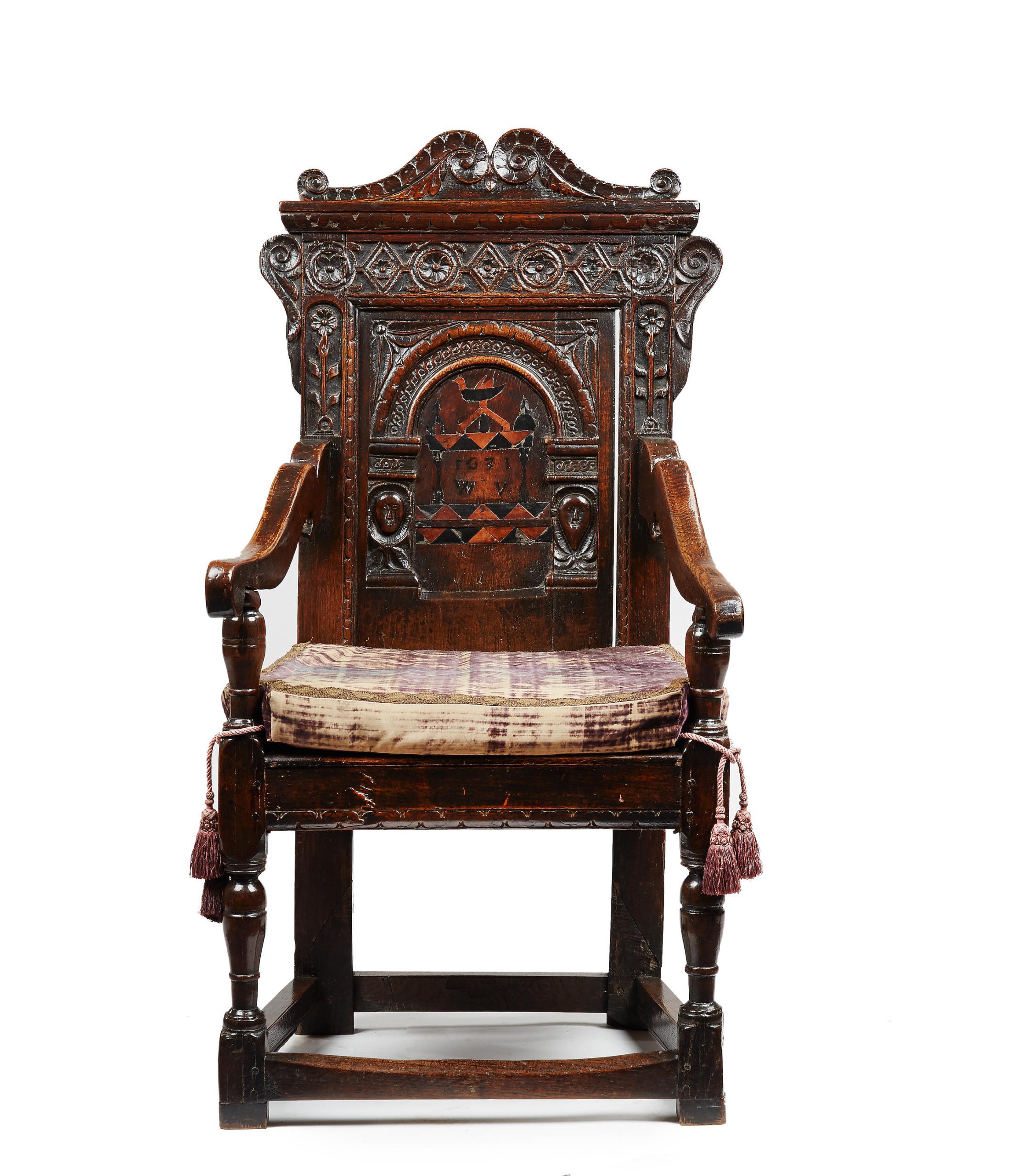
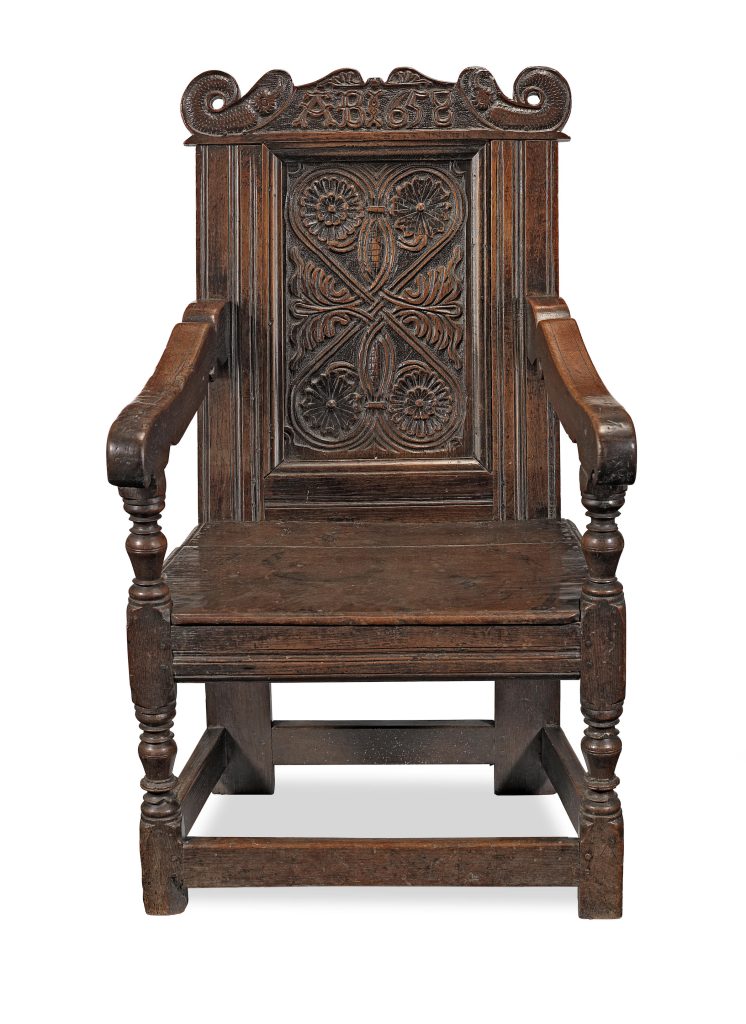
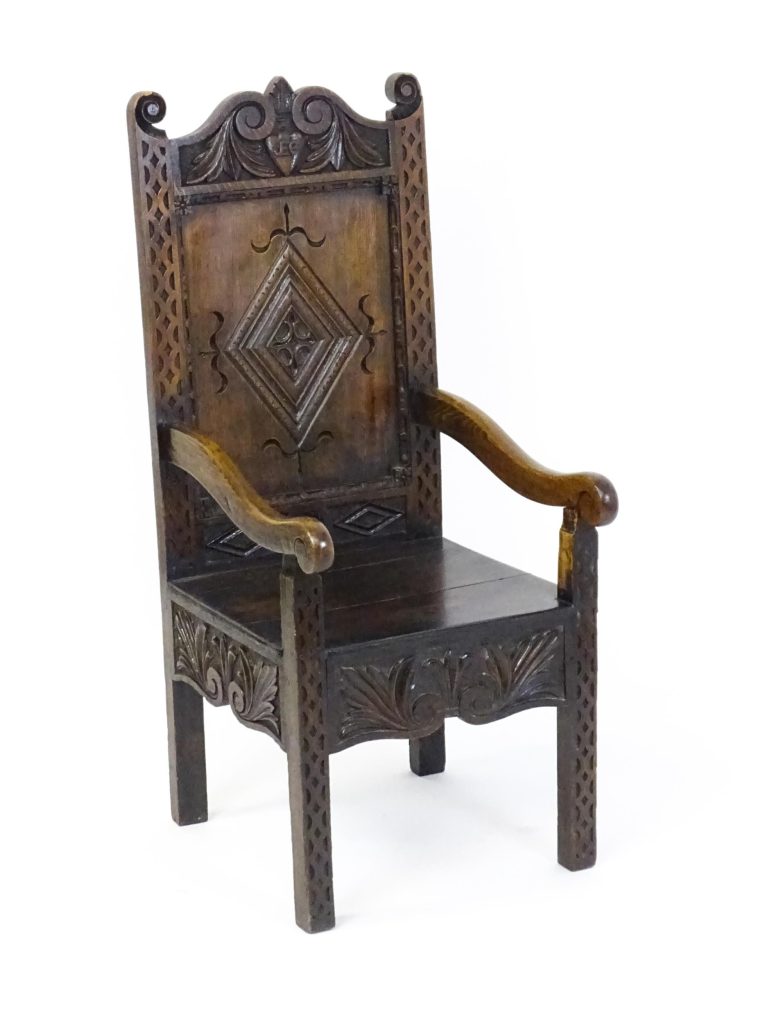
Origin and Design: The wainscot chair originated in England during the Tudor period (1485–1603). These chairs were characterized by paneling, often made of oak, that covered the lower part of the chair back. The upper part of the chair back was typically open or had simple ornamentation.
Materials and Construction: Wainscot chairs were typically made of oak, a popular wood choice in England during this period. The construction involved sturdy joinery techniques, with mortise and tenon joints providing durability. The chairs often had a square or rectangular panel on the backrest, adding both structural support and aesthetic appeal.
Evolution and Regional Variations: As time passed, wainscot chairs evolved in design and construction. Different regions developed their variations, incorporating regional styles and preferences. In some areas, wainscot chairs had carved or turned elements for added decoration.
Popularity and Social Status: Wainscot chairs were associated with a sense of prestige and social status. They were often found in the homes of the upper class and were considered a symbol of wealth and refinement. The paneling on the chair backs not only added to their visual appeal but also provided insulation in drafty medieval and Tudor homes.
Transition to Other Styles: As design preferences changed over the centuries, wainscot chairs transitioned into other styles. However, the basic concept of paneling on the lower part of the chair back persisted in various forms. Wainscot-style elements also influenced the design of other furniture pieces.
Revival Periods: Wainscot chairs experienced revivals in popularity during certain periods, such as the 17th-century Jacobean revival and the 19th-century Gothic Revival. During these times, craftsmen and designers drew inspiration from historical styles, including wainscot chairs.
Contemporary Interpretations: Today, craftsmen and furniture designers continue to draw inspiration from historical wainscot chairs. Modern interpretations may incorporate traditional elements while adapting to contemporary design preferences and materials.
Wainscot chairs have thus played a significant role in the history of furniture design, reflecting the craftsmanship and aesthetic tastes of different eras.